Is Abacus Still a Good Investment in Your Child's Education?
As we move towards 2027, parents have more educational options for their children than ever before. From online learning platforms and educational apps to AI-powered learning tools, children can now explore subjects in many different ways.
But one question continues to come up among parents:
Is learning abacus still worth it for children in 2027?
The answer depends on what parents expect from the programme and how effectively it is taught.
Abacus learning is not simply about moving beads or calculating numbers quickly. A structured abacus programme introduces children to number representation, arithmetic operations, visualisation and mental calculation.
With regular practice, children gradually learn to perform calculations mentally using techniques developed through physical abacus training.
For parents looking for an additional educational activity that encourages mathematical practice, abacus can be a worthwhile option.
Let's explore why.
1. What Is Abacus Learning and How Does It Work?
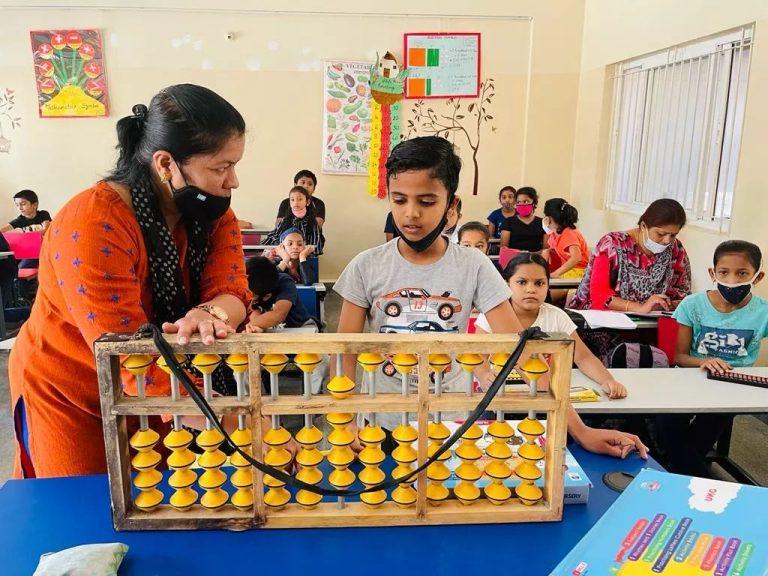
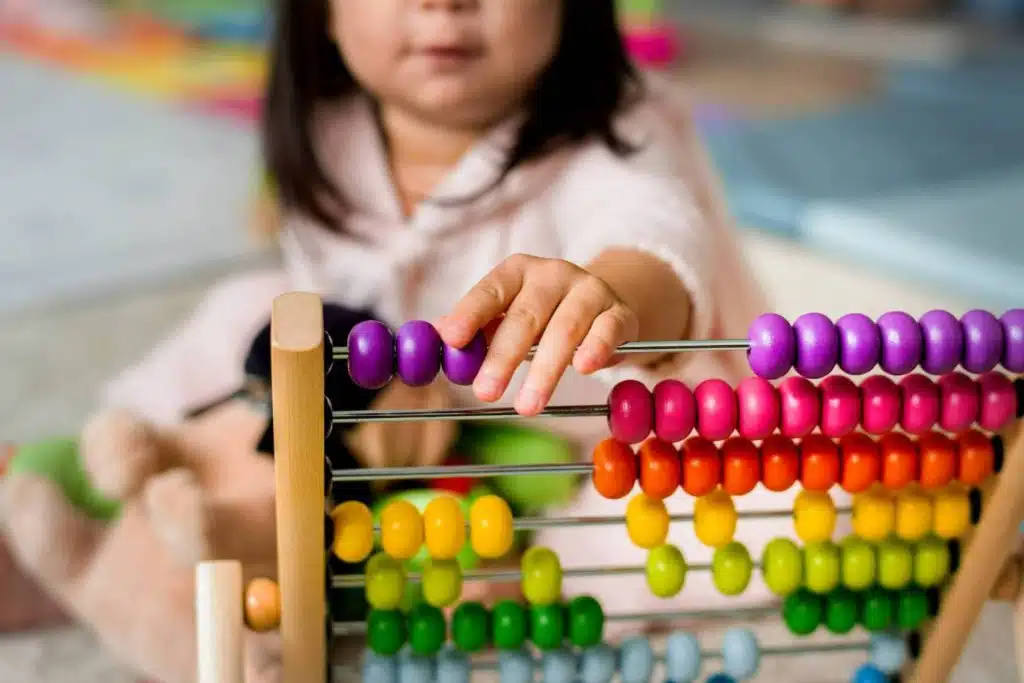
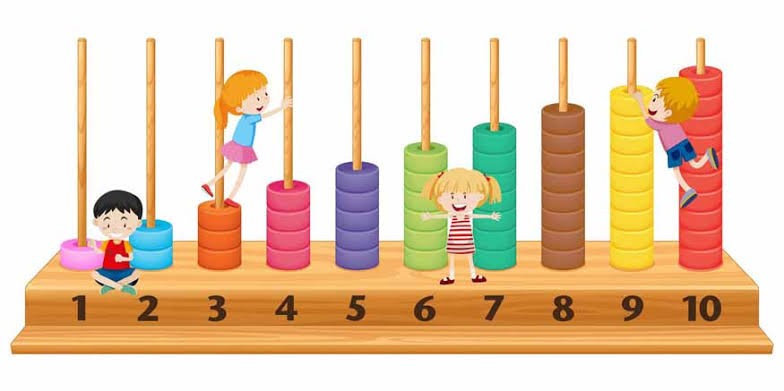
An abacus is a traditional calculating instrument consisting of a frame, rods and movable beads. Each rod represents a place value, allowing children to understand how numbers are formed.
For example, children learn how to represent numbers using ones, tens, hundreds and thousands.
The Japanese Soroban method is one of the most widely recognised approaches to abacus-based calculation.
Children typically progress through three stages:
Stage 1: Physical Abacus Learning
Children learn bead movements and practise basic calculations using an actual abacus.
Stage 2: Developing Calculation Skills
As they become comfortable with the method, they practise addition, subtraction, multiplication and division with increasingly complex numbers.
Stage 3: Mental Abacus Learning
Children gradually learn to imagine an abacus in their minds and mentally move the beads to solve calculations without physically touching the instrument.
This progression makes abacus learning a structured activity that combines visual representation and arithmetic practice.
2. Seven Benefits of Abacus Learning for Kids in 2027
Abacus training can provide children with opportunities to practise several important learning skills.
Here are seven reasons parents consider enrolling their children in abacus classes.
1. Improves Mental Calculation Practice
One of the main purposes of abacus training is to help children perform calculations mentally.
Through regular exercises, children gradually learn techniques for solving addition, subtraction, multiplication and division problems.
This can make everyday numerical calculations more comfortable.
2. Develops Number Understanding
Children sometimes find mathematical concepts difficult when they only see numbers written on paper.
The abacus provides a physical representation of numbers.
By moving beads and understanding their positions, children can explore place values and arithmetic operations in a practical way.
3. Encourages Concentration
Abacus exercises require children to listen carefully, remember numbers and follow calculation steps.
Regular practice provides opportunities to develop focused attention during learning activities.
4. Introduces Visualisation Skills
Mental abacus calculation involves imagining bead positions and manipulating them mentally.
This gives children practical experience in visualising numerical information.
5. Builds Confidence Through Progress
Learning becomes more enjoyable when children can see their progress.
Completing exercises, understanding new techniques and reaching learning milestones can help children feel more confident about their mathematical abilities.
6. Encourages Regular Learning Habits
Abacus learning requires consistency.
Short, regular practice sessions help children become familiar with calculation techniques and gradually improve their accuracy.
This also introduces them to the value of practising a skill over time.
7. Makes Mathematics More Interactive
Instead of depending entirely on textbooks and worksheets, children can use an abacus to explore numbers through physical activities.
This practical approach can make arithmetic more engaging for children who enjoy interactive learning.
Important: These benefits are not guaranteed for every child. Progress depends on the child's interest, regular practice, teaching quality and individual learning needs.
3. At What Age Should Children Start Learning Abacus?
Parents often wonder whether their child is too young or too old to begin abacus classes.
Many programmes introduce abacus learning around the age of four or five, depending on the child's readiness.
A general learning progression may look like this:
Ages 4–6: Foundation Stage
Number recognition
Basic counting
Introduction to the abacus
Simple bead movements
Understanding basic number concepts
Ages 7–9: Skill Development Stage
Addition and subtraction
Understanding place values
More advanced abacus techniques
Regular calculation practice
Ages 10–12: Advanced Learning Stage
Multi-digit calculations
Multiplication and division
Mental abacus visualisation
Speed and accuracy exercises
Ages 13–15: Further Practice Stage
Advanced calculation techniques
Complex arithmetic exercises
Mental calculation practice
Accuracy and confidence development
These are general examples, not fixed age requirements. A child's readiness and previous mathematical experience matter more than age alone.
4. Is Abacus Better Than Traditional Mathematics or Calculators?
This is one of the most common questions parents ask.
The truth is that abacus, school mathematics and calculators serve different purposes.
Learning methodMain purposeAbacusVisual calculation and mental arithmetic practiceSchool mathematicsMathematical concepts, reasoning and problem-solvingCalculatorFast and accurate numerical calculationsEducational appsInteractive lessons and additional practice
Abacus should not replace school mathematics.
Instead, it can complement a child's regular education by providing additional opportunities to practise arithmetic.
Similarly, calculators are useful tools, but children should also understand how calculations work instead of depending entirely on technology.
A balanced learning approach can include all these methods.
5. Is Abacus Learning Supported by Research?
Abacus-based mental calculation has been studied in educational and cognitive science research.
A randomized controlled study published in 2016 examined mental abacus instruction among elementary-school children over three years.
The researchers reported improvements in arithmetic performance among children receiving the training compared with the control group.
Other research has explored the relationship between abacus training, numerical processing, working memory and attention.
However, parents should understand an important distinction:
Improvement in arithmetic performance does not automatically mean that abacus training increases general intelligence or guarantees better marks in every school subject.
The strongest reason to consider abacus is its direct educational purpose: structured practice in arithmetic and mental calculation.
Parents interested in the research can explore:
6. How Much Time Should Children Spend Practising Abacus?
Children do not necessarily need to spend hours practising every day.
The ideal practice schedule depends on their age, learning level and programme requirements.
A practical approach can include:
Short daily practice sessions.
Revising techniques learned in class.
Completing age-appropriate exercises.
Practising accuracy before focusing on speed.
Taking breaks when children become tired.
Parents should avoid putting unnecessary pressure on children to complete calculations as quickly as possible.
The goal should be consistent learning and gradual improvement.
7. How to Choose the Right Abacus Classes for Your Child in 2027
Choosing the right learning centre is just as important as choosing the programme.
Before enrolling your child, consider the following points.
Check the Curriculum
Ask whether the centre follows a structured curriculum with clearly defined learning levels.
Understand the Teaching Method
Find out whether teachers explain the concepts properly or focus only on completing exercises.
Check Teacher Experience
An instructor should understand the abacus method and be comfortable teaching children with different learning abilities.
Ask About Class Size
A suitable batch size allows teachers to observe students and provide individual guidance.
Look for Progress Tracking
Parents should receive updates about their child's learning progress and areas that need additional practice.
Attend a Demo Class
A demonstration class can help you understand the teaching approach and see whether your child enjoys the experience.
Avoid Unrealistic Promises
Be careful with programmes that promise guaranteed intelligence improvement, perfect school results or extraordinary calculation speeds in a very short period.
A good learning centre should focus on understanding, regular practice and a positive educational environment.
8. Why Consider Orphosys Abacus for Your Child?
If you are exploring abacus classes for your child in 2027, Orphosys Abacus offers a structured Japanese Soroban-based learning programme.
Designed for children aged 4–15, the programme follows a Level 0 to Level 9 learning structure.
The aim is to help children progress from introductory abacus concepts to more advanced arithmetic and mental calculation techniques.
But Orphosys believes that children's development involves more than mathematics alone.
Its learning approach includes four educational pillars:
Mental Education
Abacus training, mental calculation, visualisation activities and brain games encourage children to practise numerical and structured thinking skills.
Physical Education
Movement-based activities, dance and coordination exercises introduce physical activities into the learning experience.
Social Education
Group activities, communication exercises and public-speaking opportunities encourage interaction and participation.
Spiritual Education
Mindfulness, meditation and value-based activities introduce children to reflection and positive learning habits.
Orphosys also provides the Orphosyskids app to support additional practice at home.
Parents can explore the complete programme here:
9. Why Parents Should Consider a Demo Class Before Enrolling
Every child has a different learning style.
Some children enjoy working with numbers, while others need more time and encouragement.
A demo class gives parents an opportunity to understand how the programme works before making a decision.
During the class, you can observe:
How the teacher introduces the abacus.
Whether the child understands the basic techniques.
Whether the activities are suitable for the child's age.
How the learning levels are structured.
Whether the child feels comfortable participating.
This makes it easier to decide whether abacus learning is suitable for your child.
Families in South Kolkata can also explore the Orphosys Abacus Dhakuria Centre for centre information.
Parents can contact Orphosys to enquire about a free demo class and available learning options.
10. Is Abacus Learning Worth It in 2027? The Final Verdict
So, is abacus learning worth it for kids in 2027?
For children who enjoy working with numbers and benefit from structured, practical learning activities, abacus can be a worthwhile additional educational programme.
It provides opportunities to practise mental arithmetic, understand number representation, improve calculation techniques and experience the satisfaction of learning a new skill.
However, abacus is not a replacement for school education, and every child does not need to learn it.
The right decision depends on the child's interests, learning needs and the quality of the programme.
Rather than choosing a class simply because it promises fast results, parents should look for a supportive learning environment where children can understand concepts, practise regularly and progress at their own pace.
In 2027, the best investment in a child's education is not simply learning faster. It is learning better.
Frequently Asked Questions (FAQs)
1. Is abacus learning worth it for kids in 2027?
Yes, it can be worthwhile for children who want to practise mental arithmetic and numerical skills. Its value depends on the teaching method, the child's interest and regular practice.
2. What is the best age to start abacus classes?
Many programmes accept children from around four or five years old. However, readiness, number awareness and the ability to follow instructions are important considerations.
3. Does abacus improve a child's mathematics skills?
Abacus training provides structured practice in arithmetic operations and mental calculations. Research has reported improvements in arithmetic performance among children receiving abacus instruction.
4. How long does it take to learn abacus?
There is no fixed learning period. It depends on the curriculum, training frequency, practice habits and the child's progress.
5. Can children learn abacus online?
Yes. Online programmes can provide lessons and guided practice. Parents should check teacher interaction, learning materials, progress tracking and the suitability of the online format.
6. Is Japanese Soroban good for beginners?
Japanese Soroban is a structured abacus method that can be introduced through basic number representation and simple bead movements. It is suitable for beginners when taught at an age-appropriate level.
7. Does abacus replace school mathematics?
No. Abacus complements school mathematics by providing additional arithmetic practice. It does not replace mathematical concepts, reasoning or broader problem-solving education.
8. Where can I find abacus classes in Kolkata?
Parents can explore Orphosys Abacus and its Dhakuria centre in Kolkata to learn about its Japanese Soroban programme and available demo classes.
Explore Abacus Learning With Orphosys
Thinking about introducing your child to abacus learning?
Explore the Orphosys Abacus programme, learn about its teaching approach and enquire about a demo class.
Website: https://orphosysabacus.com/
Centre: Orphosys Abacus Dhakuria
Give your child an opportunity to explore numbers, practise mental calculations and enjoy a new way of learning.
Join the Conversation on Reddit
Do you think abacus learning is still worth it for children in 2027?
We would love to hear what parents and educators think.
Read our Reddit discussion and share your thoughts.
Research References
Barner et al. (2016), Learning Mathematics in a Visuospatial Format: A Randomized, Controlled Trial of Mental Abacus Instruction. PubMed research.
Review of research on abacus training and cognitive functions. PubMed research.