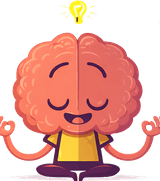
  <p>Why do young children pick up foreign languages, piano fingerings, and swimming strokes with effortless ease, while adults struggle for years? The scientific answer lies in a single neurological phenomenon: <strong>neuroplasticity</strong>.</p>

  <h2>The Critical Growth Window</h2>
  <p>Between ages 4 and 12, a child's cerebral cortex produces twice as many synaptic connections as an adult brain. During this formative window, the brain actively sculpts neural pathways based on sensory stimulation. Connections that are exercised frequently become permanent superhighways; unused connections undergo synaptic pruning.</p>

  <h2>Why Traditional Rote Learning Misses the Mark</h2>
  <p>Memorizing tables through passive chanting treats the brain as a container to be filled. In contrast, the Soroban abacus turns abstract numbers into tangible, movable physical objects that a 5-year-old can see, touch, and slide.</p>

  <h2>What Happens After Age 12?</h2>
  <p>While an adolescent or adult can certainly learn abacus mechanics, the ability to build an instantaneous, photographic <em>mental soroban</em> drops sharply once synaptic flexibility declines. Starting early gives children an unfair advantage that carries into board exams, Olympiads, and STEM careers.</p>

  <h2>Our Little Champs & Junior Modules</h2>
  <p>To honor this developmental phase, Orphosys offers customized tracks:</p>
  <ul>
    <li><strong>Little Champs (Ages 4–6):</strong> Story-driven number identification, large-bead tactile play, and motor coordination.</li>
    <li><strong>Junior Achievers (Ages 7–11):</strong> Speed mental arithmetic, Vedic math cross-checking, and state-level competition prep.</li>
    <li><strong>Senior Scholars (Ages 12+):</strong> Algebraic mental shortcuts, 16 Vedic Sutras, and competitive exam readiness.</li>
  </ul>

  <p>Invest in your child's cognitive foundation while their brain is most eager to grow.</p>
Ages 4 to 12: Why Neuroplasticity is the Golden Window for Abacus
Published 10/28/2026 · 2 min read